
Marilyn on Marrow:
The superfood no one is talking about


For our son’s 30th birthday, Rob and I offered to take him and his fiancé, Emily, to a restaurant of his choosing. He opted for one known as “an exceptional Old World, fine dining experience offering the highest quality meat and seafood…”
The website held the promise of a Great Gatsby night, but it was more of a cozy, wood paneled, gentleman’s club with red leather banquets for intimate dining. The walls were decked with olden day portraits and memorabilia without the vintage overload of cluttercore. It was a comfortable haven on a rainy Saturday night, but there was nothing Gatsby about it if one was expecting glitter, feathers, or anything reminiscent of the roaring twenties.
Yet with a single dish, I was transported… not to the Gatsby era, but to the days of my early childhood. The days when my father took over domestic responsibilities to nurse my mother back to good health from her near-death experience with pernicious anemia. (You can read the details of that story here in this excerpt from my memoir.)
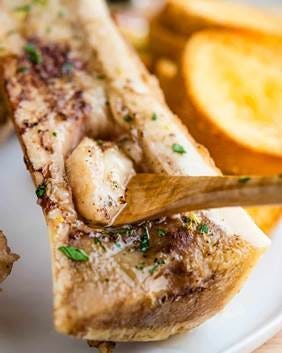
In the story, I mention that my dad prepared shank bones in the pressure cooker for the delicious, stewed meat on the bones and more importantly for the healthful marrow inside them. As a child, I would blow it out of the donut-like round hole onto a piece of crusty bread and spread it like butter, just adding a dash of salt. It was heaven.
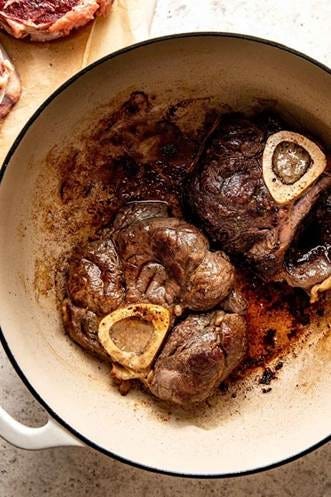
I can still savor its gelatinous, melt-in-your-mouth texture and savory flavor. Fatty, yes, but healthy fats, the kind you can enjoy in small doses without guilt. At our fancy restaurant, they served six inch long “canoe-cut,” marrow-laden bones graced with herb salad on top. The bone marrow was accompanied by a small dish of onion marmalade, both to be spread on hot sourdough garlic bread. Yum!
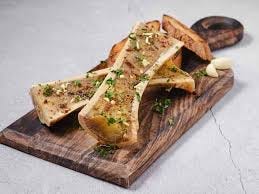
If you are not familiar with this delicacy the sight of six roasted bones on a plate may seem off-putting, but to me, it brought back memories of being seven years old again and back in my father’s kitchen.
Known as a superfood, marrow is the soft, spongy nutrient-dense substance in the core of bones where blood cells, stem cells, and immune-boosting cells are produced. No doubt, this is just what the doctor ordered for my recovering mother after her life-threatening drop in red blood cells. And happily, it became a staple in our home.
In fancy restaurants, it is the star ingredient in classic dishes like Italian Osso Buco and Vietnamese Pho broth. But in our house we just called it “spic.” Why? I’m guessing my science teacher father used this scientific term incorrectly because biologically speaking, “spic” refers to the bony spicules which are “small, needle-like fragments of bone that pathologists look for in a bone marrow biopsy.” The presence of these spicules confirms that an adequate bone marrow sample has been successfully collected.
So, while “spic” is NOT a colloquial term used for bone marrow, it is a superfood!
Nutrition:
Bone marrow is packed with healthy fats, collagen, and essential vitamins like Vitamin B12 which is essential for red blood cell production, neurological function, and DNA synthesis.
A 100g serving of marrow can provide up to 52% of your Reference Daily Intake (RDI).
· Riboflavin (Vitamin B2): A crucial component for cellular energy production.
· Vitamin K2 (Menaquinone): Crucial for direct calcium management. It guides calcium directly to bones and teeth instead of letting it calcify in blood vessels.
· Vitamins A & E: Potent fat-soluble antioxidants that provide immune system and vision support.
· Iron: Supporting oxygen transportation throughout the body.
It also contains:
· Collagen and Gelatin: The most abundant structural proteins in the body, rich in amino acids like glycine and proline, which promote joint health and gut lining integrity.
· Conjugated Linoleic Acid (CLA): A type of fat compound that research suggests helps decrease total system inflammation and enhance white blood cell function.
· Alkylglycerols (AKGs): Immune-boosting lipids highly concentrated in bone marrow that help stimulate the production of white blood cells.
· Glucosamine & Chondroitin: Essential structural blocks utilized by the body to repair joint wear and tear and maintain cartilage.
When they call it a superfood, they are not kidding. But I call it plain delicious. It has an intense, savory, and rich flavor with a velvety texture and spreads like butter on toasted, crusty bread.
Here’s a recipe and video on the chance you’d like to experiment at home. Remember, it’s an appetizer. You eat in small quantities like butter on your bread.
I am curious to hear from any of you who have had marrow experiences of your own. Good or bad. Feel free to share in the comments.
Bon Appetit!
Marilyn is a librarian and fiction author, currently in the querying trenches with two novels and writing her third, a middle-grade fantasy. She lives West Orange, NJ with her sweet, supportive husband, Rob Lieberman, and their support-cat, Miskit (short for Miss Kitty.) Their grown son, Matt, is making his own stories, sharing his heart, and rocking the world one day at a time.
Correction: My friend Greg pointed out that Osso Buco is Italian not French.
Here's what Wikipedia said:
Ossobuco or osso buco is Italian for 'bone with a hole' (osso: 'bone', buco: 'hole'), a reference to the marrow hole at the center of the cross-cut veal shank. Thanks Greg!
Marilyn, another wonderful story. Please keep them coming.
I have not had this delicious looking dish, but after reading the recipe and watching the video, I will be stopping at my butcher to see if he can provide them. I haven't seen them available in the markets here in NZ, but I'm sure they can be had. Thanks for opening ours eyes to this superfood, and what a great way to celebrate Matty's special day. Hugs!