
Critique without Criticism
“You’re not wearing that to the party!”

Polite Silence
My mother always said, “If you can’t say anything nice, don’t say anything at all.” And that made sense to me, even though it was impossible to do. I mean how could anyone bite their tongue? Especially when you were a kid!
For example, my best friend in elementary school didn’t think twice the day she looked at my outfit and said: “What are you wearing? Didn’t anyone ever tell you prints and plaids never go together?” I was mortified. I didn’t know. My mother, the artist, neglected to tell me the cardinal rule of fashion.
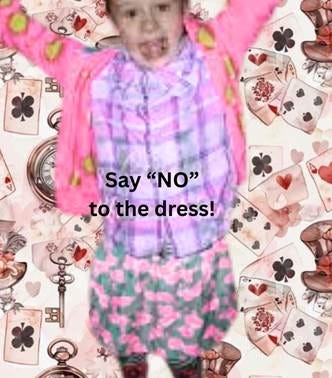
But back to my mother’s advice. Could my friend have said nothing? Was that the polite way to respond? Yes, but I would have remained a social pariah for all time!
Could she have said it nicer? Perhaps. But as kids we just said what was on our minds, right? Filters were lacking in grade school. But our sensitivity to embarrassment was not. Children do not like criticism any more or less than adults do.
Constructive Criticism
As I got older, I learned about “constructive criticism” – the kind of supportive feedback that my middle and high school teachers encouraged us students to give and receive as we evaluated each other’s papers. The goal was to help “improve” each other’s writing.
It wasn’t supposed to be about fault-finding or even pointing out mistakes. Instead, we were told to identify strengths and weaknesses of each argument with the intent of fostering positive change. Of course, the teachers never told us “how to deliver” this kind of feedback. So, we never received guidance for generating “kind and truly productive” feedback. Instead, the criticism I received went like this with comments scattered all over the pages: “No! What? Makes no sense. ???, I disagree. Show proof. Flowery words.”
Not exactly helpful to me.

Constructive Delivery
Later, I after I entered the business world, I learned the practice of front-loading praise before delivering the hatchet. This was famously used at performance evaluations. This “I have some good news and some bad news” form of critiquing often ended with a sledgehammer aimed at the recipient’s motivational muscle. “Fix this or you won’t be considered for promotion next year either.”
Yikes!
Reviews could be brutal.
And when I took my turn at being the “reviewer,” my comments could be equally crushing.I remember being a judge for many ITVA (International Television Association) competitions where a panel of us would watch video after video till our eyes bulged out, after which, we rate each program and offer comments.
There were no humans to humiliate, so we just set our pens to paper and without fear of reprisal, we buried hatchet after hatchet. I often wrote, short, scathing comments, especially where program quality was concerned. “Nice opening, but show devolved after that. boring; slow pacing; bad audio. You should have used professionals.”

Looking back now, I’m sure the recipient of these feedback reviews were devastated. And my comments were far from constructive. But now I know better.
Liz Lerman’s Critical Response ProcessSM
I came to understand there was a better way after learning about Liz Lerman’s Critical Response ProcessSM in a workshop with children’s book author, Karen Krossing -- a 9-week picture book writing class I signed up for that was offered by Whale Rock Writers Group.
To prepare us for the workshop, Karen gave us links to CRP videos and reading materials. It was to be the foundation of how we critiqued each other’s work throughout the class. She encouraged us to practice this “better, more supportive” method and guided us in its use. And while I was not a natural at it, I have to say it is a more productive way to give and receive critiques.
With CRP, ugly criticism is transformed into respectfully shared observations by responders for the artist to contemplate under the guidance of the facilitator.
This simple, thoughtful approach allows the artist to arrive at their own conclusions based on the questions and opinions provided by the respondents.
It doesn’t matter if it’s prose or poetry, dance or multi-media, music composition or performance, Lerman’s CRP is intended to launch positive dialogues about any kind of artistic works-in-progress to get the artist to think about their work differently. These fresh thoughts serve to get the artist to question their decision-making process and inform them about alternative approaches and ideas that may or may not improve the piece. Instead of leveling cold-blooded criticism, the artist is primed for their own “ah-ha” moments—inspired by the dialogue.
Without going into details, each multi-step question and answer session creates dialogue that is respectful. It offers the artist opportunities to examine how others are perceiving their work and allows the artist to consider the respondents’ thoughts as options for change, if they wish.
And as a result, the artist will never feel defensive, attacked, or criticized. No hurt feelings.
Use CRP at home with your children and partner, with friends and strangers, or at any point in your professional life. If my childhood friend had asked me if I wanted her opinion about my mixed-pattern clothing options, I could have said yes or no. And if yes, I could have learned the same lesson without being mortified. It would have been a beautiful thing.
My opinion, if I may give it? It’s not too late to be civilized in this uncivil world, and I think this type of dialogue takes us one step closer to that. Thank you, author and teacher, Karen Krossing, for opening my eyes to Liz Lerman’s method of critiquing with kindness.
Marilyn is a librarian and fiction author, currently in the querying trenches with two novels and writing her third, a middle-grade fantasy. She lives West Orange, NJ with her sweet, supportive husband, Rob Lieberman, and their support-cat, Miskit (short for Miss Kitty.) Their grown son, Matt, is making his own stories, sharing his heart, and rocking the world one day at a time.
I learned years ago from my husband’s example that one can productively make comments in a positive, loving way. It’s encouraging to hear Liz Lerman had found a method to teach others how to support and encourage people to shine and improve in whatever venue they choose to express. Thank you for sharing this thoughtful approach.
I must think of my words wisely, I LOVED WHAT YOU EXPRESSED Marilyn, I must look into Liz L.